

Stop Managing Time, Start Managing Relationships: Build a People-Centric Calendar Based on ‘Who’ and not Just ‘What’ or ‘How’
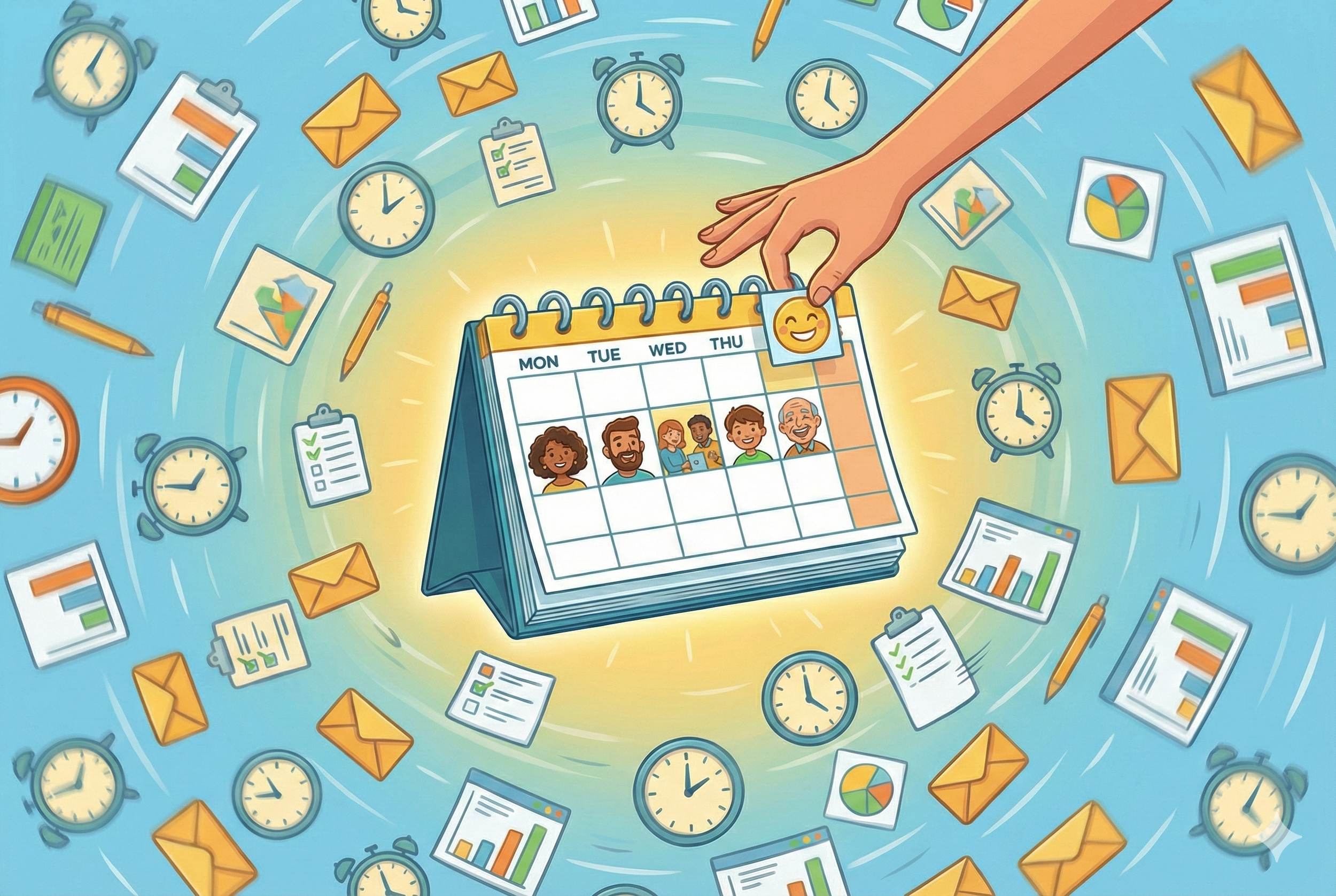
Amidst the daily whirlwind of retail tasks, focus your calendar on your people.
I came across this idea after reading the LeadershipFreak article, “Build a People-Centric Calendar.” I liked the idea and was disappointed there weren’t many other articles on the topic. The concept makes so much sense, even if not always easy to do. I wanted to explore it more. After all, we have all had that moment where you get to the end of a long week, you look back at your calendar, and you wonder: what did I really accomplish in my leadership role? It is packed with task lists, compliance checks, and "to-do" items masquerading as meetings. It doesn’t feel like I did as much as I could have.
If your calendar looks exactly like your task list, you are likely missing the biggest opportunity you have as a leader.
Most of us treat our calendars as tools for efficiency. We ask, "What needs to get done?" and "When do I have a gap to do it?" But in leadership, efficiency isn't the only goal. Effectiveness is. And effectiveness is rarely about what gets done. It is about who gets developed. That is easy to say, and hard to do. For many, that might even seem like a dream. We’d all love to have more coaching or development time, but we feel stuck going to meetings. I have certainly been there before. And, honestly, I still find myself in more meetings that could have been a email than I’d care to admit.
However, I do believe it is very possible to shift from a task-centric calendar to a people-centric one. This isn't just about being "nice" or having more chats. It is a fundamental mindset shift that changes how you prepare for your day and how you impact your team.
Here are some ideas on how stop letting your calendar manage you and start using it to manage your relationships.
The Calendar Audit
You cannot change what you do not see. The first step is to stop and look at where your time has actually gone. Go back and look at your calendar for the last two weeks. I want you to look at each entry, every conference call, every store visit, every "touch base." Now, categorize them.
Task-Driven: Was this meeting about compliance? Was it about checking a box? Was it purely administrative?
People-Driven: Was this meeting about development? Was it about coaching? Was it about making someone else better at their job?
Be honest with yourself. If you are a District Manager, did you go to the store just to check the visual merchandising, or did you go to help the Store Manager see what you see? If you are a Store Manager, was that "Weekly Team Meeting" just you reading a communication to your team, or was it a discussion that built their business acumen?
Don’t worry about how your audit turns out. It will likely be stacked more on the task side of things, if you are truly honest with yourself. That is okay. The point here is to realize it and begin making adjustments that can shift the weighting between task-driven and people-driven.
Mindset Matters
I am not advocating that you blow up your calendar and cancel everything, though that would be nice. Instead, look for opportunities to reframe meetings as more people driven. For any calendar entries you own, make the adjustment. For those meetings where you’re invited, begin to capture what you can do differently to reposition the contribution you make in a more people driven way. You can also share your ideas for reframing meetings with your peers or managers to help them think different about it as well.
This sounds simple, but it changes your entire psychological approach before you even walk into the room or jump on your Teams call.
If your calendar says "Visit Store 123," your brain goes into inspection mode. You are going to a physical location (Store 123) to check on things (tasks). Change that entry to "Development Visit with Tom." Note the specifics of what you want to accomplish during that time. The result may still be that you accomplish the validation of items that needed to be completed, but you approach it in a very different way.
The location becomes irrelevant. The focus is the person. You might ask more questions and show greater curiosity, because now it's about Tom, not the task. You're not there to check end caps. You're there to help Tom reduce his stress by building a better plan. You're there to help him develop his eye for merchandising or figure out how to spend more time with his team.
The activity might look similar on the outside, but the energy you bring is completely different. You are there to serve, not just to inspect.
Protecting Your Energy
Being people-centric takes a lot of energy. It is often easier to spend time answering emails (Task) than it is to have a difficult coaching conversation (People). If you try to make every single moment of your day a deep, emotional leadership interaction, you will burn out by Tuesday.
We have discussed the importance of managing energy, not just time. You have to be realistic. Not every meeting needs to be a developmental session. Some meetings are just functional. Projects need to move forward. That is okay.
But for the important ones, you need to match your energy to the calendar. If you know you are a morning person, schedule your "People" time then. Don't schedule a critical development conversation for 4:30 PM on a Friday when your battery is empty.
The Observer Role
On days when your energy is low, you can still be people-centric by playing the "Observer Role." If you have a team meeting, tell your team upfront: "I am going to take a step back today. I want you to lead this discussion. I am here to listen and observe."
This saves your energy because you aren't performing, and it is actually better for your team. It gives them the space to grow, to speak up, and to own the room. You are still developing them, but you are doing it by stepping back rather than leaning in.
The Payoff: Redefining "Work"
The biggest hurdle to this mindset shift is the guilt we feel at the end of the day. We are wired to feel productive when we check boxes. When you spend your day developing people, you might get to 5:00 PM and think, "Gosh, all I did was sit in meetings all day. I didn't get any real work done."
You have to stop beating yourself up for that.
As you grow in leadership, your role changes. You spend less time "doing" and more time "coaching." If you sat in meetings all day, but you helped a manager solve a problem they couldn't solve yesterday, or you helped a team member see a new career path, you had a highly productive day. The "doing" part of the job will always be there. But your unique contribution, the value only you can add is in the thinking, the strategy, and the development of others.
Take a look at your calendar for next week. Find one "task" entry and rename it to a "people" entry. Define your purpose before you walk in the door. It might just change the way you see your entire role.
How will you shift your calendar to be more people-centric?
Get leadership tips and new articles you can use directly to your inbox. Join the thousands of other leaders continuing your leadership development journey with **Effective Retail Leader.com.**
DISCLAIMER: I participate in the Amazon Services LLC Associates Program, an affiliate advertising program designed to provide a means for me to earn fees by linking to Amazon.com and affiliated sites. Other links to third-party products and services may also be affiliate links.