

Nine Years of Sharing Leadership Lessons, Ideas, and Experiences
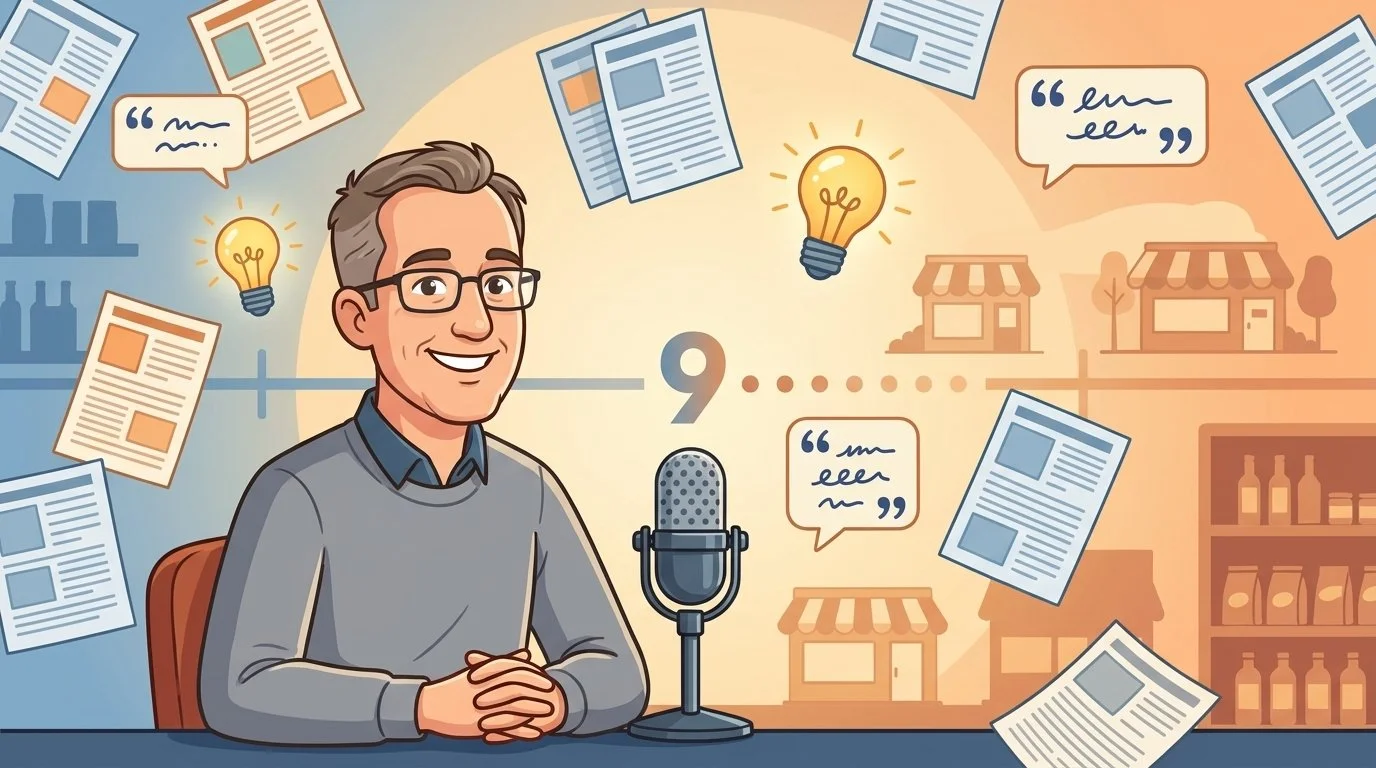
Nine Years of Sharing and Learning
A friend of mind wanted to talk to me about how I started writing my blog, where Effective Retail Leader came from and a few other related thoughts about leadership. I thought it would be fun to share the key parts of of our discussion here.
This month marks nine years of Effective Retail Leader. Close to nine hundred articles. Two every week, plus a quote card, without a missed week.
Chris Richardson recently sat down to talk about how it started, what has kept it going, and what he believes about leadership now that he did not fully understand back then.
You have said that pressing post the very first time was terrifying. What were you actually afraid of?
Two things really. The obvious one was that nobody would read it. Nobody would care, nobody would find the site, and the whole thing would just feel like a failure.
But the other fear was that people would think I was wrong. I had been successful in the work I had done. I felt good about that. Writing and publishing it was something completely different. You are putting your opinion out where people can look at it and disagree.
So I took a deep breath and hit post. It took a couple of days, but a few people read it. It was slow at the start. This year the site will finish somewhere around seventy thousand views, maybe closer to seventy-five. That still surprises me about how many people see it now.
Nine years, roughly nine hundred articles, two a week. What keeps that going on the weeks you do not feel like writing?
Honestly, I am not sure I have ever hit a week where I did not have the energy for it. What keeps it steady is that I made a commitment to myself, and I feel like I made a promise to the readers. I also work hard to stay ahead. I try to spot where my time is going to get tight weeks before it happens, and have pieces ready.
The easy thing to do at this point would be to cut back to one new article a week. I have a big archive. Nobody would really notice. But I committed to two, so it stays two for now. About once a month one of them is a repost, and even those I update now, because so much has changed. If an article is from 2017 or 2018, I have to actually read it. COVID changed a lot of things.
The reposts has turned out to be one of the better parts of this. I go back and read something I have not looked at in years, and I get to reeducate myself on my own point of view. Sometimes I add to it. Sometimes it holds up and I leave it close to how it was.
I used to worry that I had already covered a topic. Then I realized not everyone has read every article.
Do you ever run out of things to say?
I used to worry about that. I would think, I already covered this one. Then I realized something that should seem obvious, not everyone has read every article. And there are different perspectives on the same topic.
The topics that matter most need to be covered more than once, in more than one way, from more than one angle. I don’t really see that as repeating myself. Plus good communication takes multiple reinforcements and approaching from different places. There is always a fresh perspective on something you thought you finished.
Party City closed and you found yourself at a crossroads in 2025. The blog was eight years old by then. Did having it change what you did next?
Not really. It did not rescue me or point me in a direction. What it did was give me some comfort. I knew it was there. I knew there was something I could build from if I wanted to. And over eight years it had built a real audience, mostly through LinkedIn, and it created connections I would not have had otherwise.
I still run into people at NRF or other industry meetings who tell me they read the articles every week. People at all different levels, in all kinds of roles. That is always nice to hear, and it keeps you going.
So at a point where I was not sure what came next, eight years of writing meant I had some credibility and I had options. That was worth a lot.
You have talked about building this into more than articles. Courses, a podcast, maybe video. What has been the hard part?
Time and perfectionism, and I know exactly how that sounds coming from someone who has written about not letting perfect get in the way of good. I struggle with the same thing I tell other people not to do.
Part of it was not knowing exactly what I wanted it to be. Part of it was not wanting to put something out that was not really good. But the bigger piece is not about quality or capability. It is about commitment. I like making commitments and keeping them. If I say I am doing a podcast every week, I need a real plan to get ahead of it and stay ahead of it, on top of everything else I am doing. I have not been able to say that with confidence yet.
That is changing. As I get more settled in the consulting work, I am getting closer to seeing how it fits. When I can promise something that is both good and consistent, it will happen.
So the reason you have not started the podcast is the same reason you have never missed a week.
I had not thought about it that way, but yes. That is exactly it.
Nine years in, has what you believe about good retail leadership changed?
The core of it has not changed at all. What has changed is how strongly I feel about it, and what I notice now that I did not notice before. What stands out to me today is how much good leaders need good leadership above them. I see a lot of genuinely good people working themselves into the ground. It isn’t because they are disorganized, but because they feel like they almost have to. And a lot of that traces straight back to leadership above them that cannot manage time and priorities.
I want people to see there is another way than being double and triple booked for hours every week. Look at what happens with vacation. People decide not to take it because they will be so far behind when they get back that it was not worth going. Or they do take it, and by day three back all the benefit is gone because they are paying a price for having been out. I want to keep pushing back on that, because I want people to see how good leadership can actually be.
AI is not going to be the one who tells somebody who is not feeling well to take the day off.
How does AI factor into that?
There is a lot of conversation right now about which roles AI is going to replace. Here is what I keep coming back to. AI is not going to be the one who notices somebody is not feeling well and tells them to take the day off and get better. AI is not going to be there when something tragic happens in someone's life and they need a person to talk to, or just to sound off to. Those are real things leaders do, and they matter more than most people realize until they need it.
If anything, I have doubled down on this. Going through COVID, watching what people went through personally and professionally over these nine years, I feel more strongly about personalized, empathetic leadership than I ever have.
If we stop fighting to have people care about other people, it gets bad. Not just at work, in every part of life. I do not want that for people and I do not want it for businesses, because all of it gets better when we keep a human thing human and connected. That is what actually makes the business go.
That one is not going to change for me. It is only going to get stronger.
Chris Richardson has been writing Effective Retail Leader since 2017. He spent seven years as Vice President of Store Operations at Party City and now runs Accents Enterprises, a retail operations consulting practice.
Get leadership tips and new articles you can use directly to your inbox. Join the thousands of other leaders continuing your leadership development journey with Effective Retail Leader.com.
DISCLAIMER: I participate in the Amazon Services LLC Associates Program, an affiliate advertising program designed to provide a means for me to earn fees by linking to Amazon.com and affiliated sites. Other links to third-party products and services may also be affiliate links.